


Even the Founder's Mom Wasn't Ready to Move
Sometimes the hardest part of making a change is deciding it's time. For years, Jeff, the founder of Sparrow Living, encouraged his mother to move into one of the Active Adult communities his company manages.
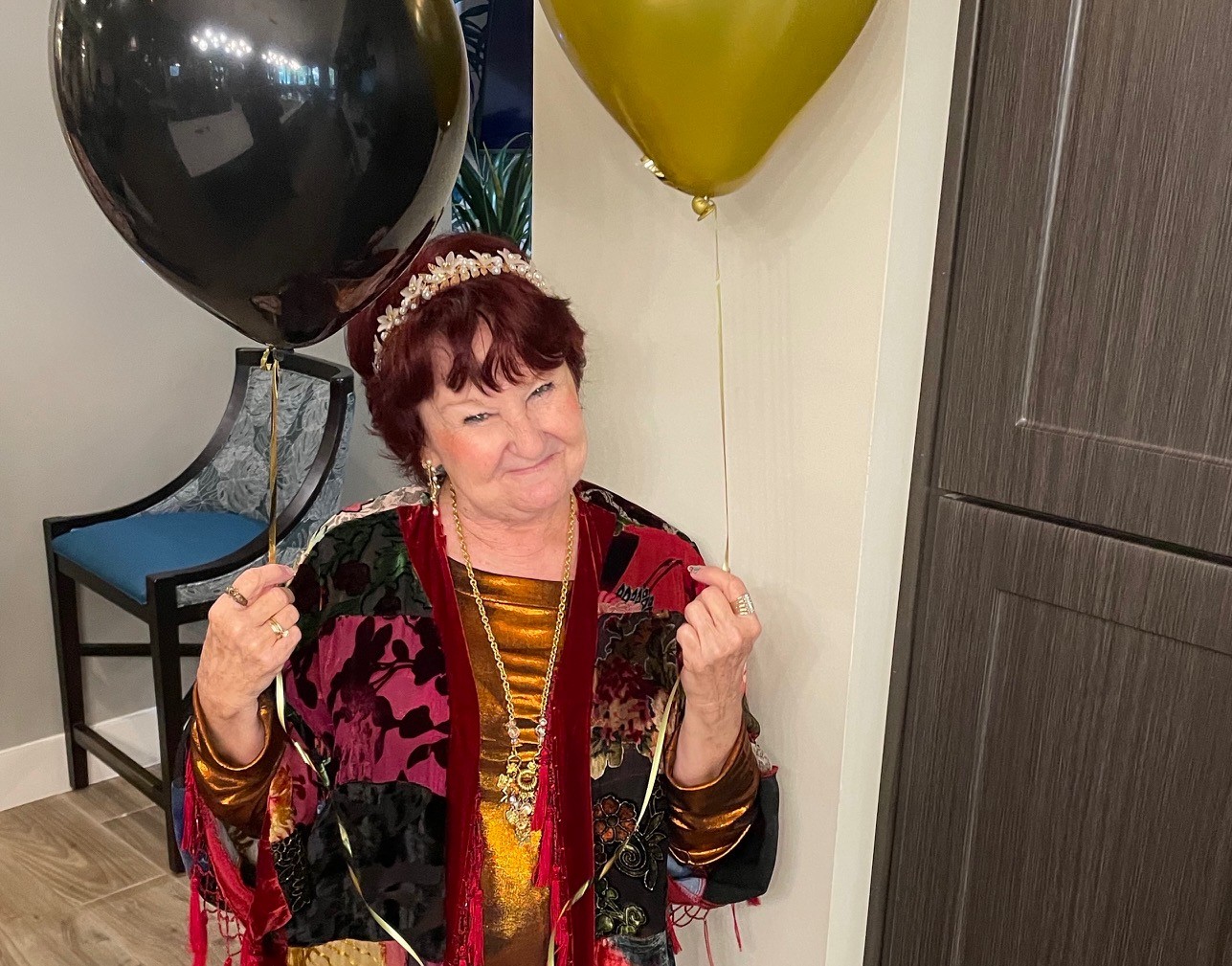
 Jeff Patterson, founder of Sparrow Living, with his brother Bryant, also a company leader, and their mother, NAME. Despite Jeff's suggestions that she consider moving into one of the communities his company manages, she put off the decision for three years. A health scare finally prompted a visit, and the exprience of community sealed the deal.
Geri was exactly the kind of person he'd envisioned when he started the company. Her children had moved away, and she was living in a house with plenty of equity, but fewer opportunities for everyday connection.
He thought she'd enjoy having friends nearby, activities to participate in, and a community of people at a similar stage of life.
But she kept putting it off.
One of her concerns was developing dementia. She was doing what she could to keep her mind sharp, including learning French and taking up new hobbies. Her doctor had also encouraged her to stay socially engaged, explaining that meaningful connections can support cognitive health.
Still, moving wasn't something she was ready to do. Then came a scare.
After taking a cognitive assessment, she was convinced she'd performed terribly. She feared that the decline she'd been worrying about had already begun. But the results told a different story. She was doing quite well.
The experience nevertheless changed her perspective. She decided to take a closer look at one of Sparrow's communities and arranged to spend some time in a guest suite. What surprised her wasn't the apartment. It was the hospitality, the people, and the sense of community she experienced during her visit.
She’s moving in this January.
It took a health scare to get her through the door. What she experienced there convinced her to make the move.
Why Do We Wait?
There's something familiar about her story. We often know that a change might make our lives better, yet find reasons to put it off.
“My family disappeared over a 5-year period and I’m so grateful that this is my new family now. This community has opened my life up to wonderful experiences and I just love it. I should have done this years ago.”
 Pamela Guess from Amberlin Wiregrass Ranch in Wesley Chapel, FL
A longtime home is more than a building. It holds memories, routines, and a sense of independence. Leaving it can feel like giving something up, even when the next home might offer something valuable in return.
And moving into a community designed for older adults can carry another uncomfortable implication: Am I getting old? Am I giving up my independence?
But those aren't necessarily the right questions. What if moving isn't about what you can no longer do? What if it's about what you'd like to do more of?
More time with friends. More opportunities to try something new. More freedom from maintaining a house. More chances to feel part of something. Many people discover those benefits after they move. And some find themselves wondering why they waited.
The question isn't whether you need to move. It's whether the life you're living today offers everything you'd like it to.
Friendship Is More Than a Nice Thing to Have
We all know that friendship makes life more enjoyable. But a growing body of research suggests that social connection is also important to our health.
In 2023, the U.S. Surgeon General issued an advisory calling attention to loneliness and social isolation as significant public health concerns.
The report describes how social connection is associated with better physical and mental health, while loneliness and isolation are associated with increased risks of several health problems.
That includes cognitive health.
Research has found that people experiencing loneliness or social isolation have a higher risk of developing dementia. Scientists are still studying the mechanisms behind these relationships and whether interventions that increase social engagement can reduce that risk.
Friendship isn't a cure or a guarantee against dementia. But staying socially connected is one meaningful way to support healthy aging.
That was part of the advice Jeff's mother received from her doctor. Learning French and challenging herself intellectually were worthwhile pursuits. So was making time for relationships.
And relationships can become harder to maintain as life changes.
Retirement removes the everyday interactions of the workplace. Friends relocate. Children build lives in other cities. Driving across town for an evening with friends can become less appealing.
You don't have to be lonely to recognize that staying connected sometimes takes more effort than it used to. That's worth thinking about when deciding where and how we want to live.
Explore the Research:
Our Epidemic of Loneliness and Isolation - Read the Advisory.
Social Isolation, Lonliness and Cognitive Health - Listen to the Episode.
What Happens When Community is Part of Everyday Life?
Think about how friendships develop.
Often, they begin with something ordinary. A conversation over coffee. A shared interest. Seeing the same person on a morning walk. An invitation to join a group. Over time, those small encounters can become meaningful relationships.
But opportunities for those encounters aren't equally available everywhere.
In a traditional neighborhood, getting together with friends may require planning, driving, and coordinating schedules. In an Active Adult community, many of those opportunities are just outside your door.
You might run into someone on the way to get the mail, join a fitness class, attend a gathering, or discover that a neighbor shares your favorite hobby.
Not every activity will interest you. Not every neighbor will become a close friend. And that's perfectly fine.
The point isn't to fill every hour with organized activities. It's to make connection easier when you want it.
At Sparrow Living, communities are designed around that idea. Shared spaces, resident activities, and opportunities to learn, exercise, and contribute create occasions for people to get to know one another.
Some residents enjoy a busy social calendar. Others prefer quieter routines and a few close friendships. Community can accommodate both.
And sometimes, the friendships become the most valuable part of living there.
You Don't Have to Wait for Something to Go Wrong
Jeff's mother isn’t moving because she'd lost her independence. Her cognitive assessment had actually gone well.
She’s moving because a scare prompted her to reconsider something she'd been putting off, and a visit showed her a different way of living.
You don't have to wait for a health concern, a difficult life transition, or a crisis to begin exploring your options. And exploring doesn't mean committing. It might simply mean asking yourself a different question:
Not just "Where do I want to live?" but "What kind of life do I want to have?"


